North Texas roofs take a beating. Sun loads spike early, heat lingers into the night, and summer storms hit hard. In Rockwall, TX, that reality shows up in high energy bills, early roof aging, and stressed HVAC equipment. A cool roof changes that equation. It reflects heat, releases stored warmth faster, and reduces roof surface temperatures so the building stays stable. For many owners, the best time to switch is at the moment the old roof starts costing more than it protects.
This guide explains how to judge the timing, what cool roof systems make sense in Rockwall County, and how SCR, Inc. General Contractors designs energy efficient roofing that performs under North Texas conditions. It also highlights local signals that matter for map-pack visibility and real results: I-30 corridor jobs, 75087 and 75032 service, and experience with reflective roof coatings and membranes on retail, offices, and warehouses near Lake Ray Hubbard.
The turning point: signs an aging roof is due for a cool roof upgrade
An old dark roof can limp along for years. During that period, a building quietly bleeds money. A practical trigger for replacement is when ongoing fixes, energy spikes, and risk exposure outweigh the cost of a cool roof system with a measurable savings curve. Owners in Rockwall, Fate, and Heath often reach that point when summers return higher and higher utility bills and maintenance logs show recurring heat-related damage.
Thermal shock is one of the clearest red flags. The roof heats fast in the afternoon and cools fast after sunset. That daily cycle stresses seams, flashings, and field membranes. Cracks expand, fasteners loosen, and water finds openings. UV radiation accelerates this cycle, and dark asphalt or old EPDM absorbs about 90 percent of solar energy. The roof surface can run 50 to 60 degrees hotter than the air on a July afternoon. In neighborhoods such as Northshore or Breezy Hill, where open exposures are common, the effect is easily noticed during midsummer walkthroughs.
Ponding water and degraded coatings often coexist with heat damage. Small low spots collect water after a storm. That water magnifies UV impact and shortens the life of the membrane. On older commercial properties near The Harbor Rockwall and along the I-30 corridor, SCR, Inc. often sees shrinking around penetrations, brittle flashing, and seam splits that return after patching. Those are practical signals to stop spending on band-aids and plan a system-level fix.
Why a cool roof pays off in Rockwall’s climate
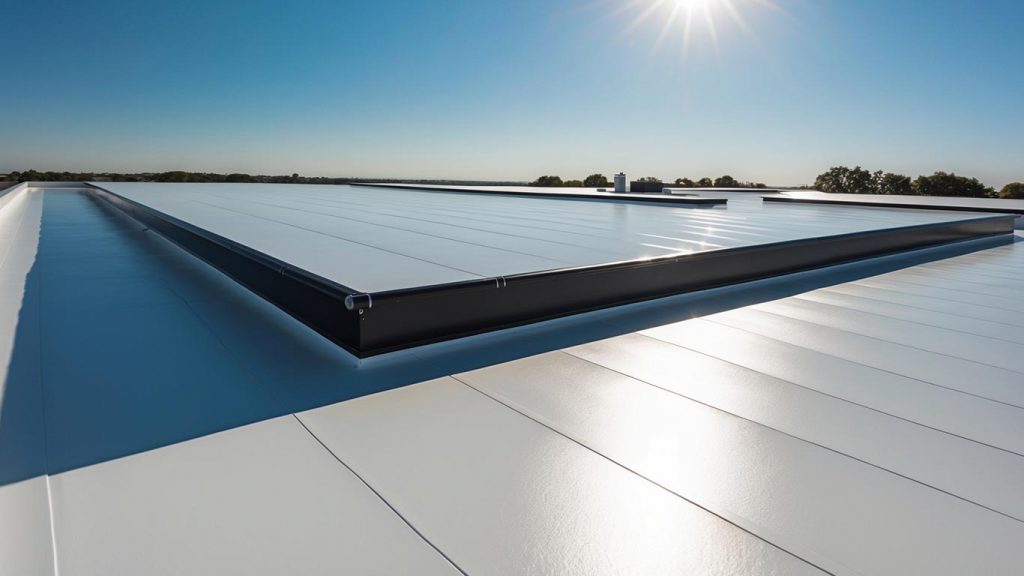
Cool roof systems reflect sunlight and release heat more efficiently. The two measurements that matter are solar reflectance and thermal emittance. High reflectance reduces the amount of energy absorbed. High emittance helps the roof shed any heat that does get in. Combined, these properties lower roof temperatures by dozens of degrees in peak sun. The result is a cooler interior, better comfort, and lower strain on rooftop AC units (RTUs) and heat pumps.
In Rockwall 75087 and the lakefront 75032 communities, this shift is tangible. SCR, Inc. has measured roof surface temperatures on a black aged membrane at well over 160°F on a 100°F day. A white reflective membrane on the same block sat 30 to 40 degrees cooler that afternoon. That difference reduces HVAC runtime, especially in the late day and early evening when retail traffic stays high near San Jacinto Plaza and The Harbor.
Most owners see energy savings in the range of 10 to 30 percent, depending on roof area, HVAC efficiency, and insulation. A mid-size office building near Buffalo Creek that upgrades from a heat-absorbing surface to a high-reflectivity membrane and adds polyiso insulation can often reduce cooling demand by a quarter. That is the point where the project stops being a “roof expense” and becomes an asset with a return.
Which cool roof system fits the building
Every roof has a history. Construction type, drainage, equipment count, and exposure should drive system choice. SCR, Inc. installs energy efficient roofing in several categories that work well in Rockwall’s solar load and weather patterns.
Elastomeric and silicone coatings are a strong option for roof restoration over sound substrates. High-solids silicone coatings form a seamless, reflective surface that resists UV and ponding water. They are often used with fabric reinforcement at seams, around scuppers, and at flashings. A careful prep with primer and localized repairs is crucial to long-term adhesion. Coatings can be efficient for warehouses near the I-30 corridor where a full tear-off would disrupt operations. They also mitigate the Urban Heat Island effect in paved commercial districts by reflecting more light back into the atmosphere.
TPO roofing provides a white, heat-welded membrane with high solar reflectance. Reinforced TPO membranes stand up well to foot traffic around RTUs and solar panels and handle thermal movement without constant resealing. TPO fits large retail roofs in Northshore or Stone Creek where mechanical roofs carry significant rooftop equipment.
PVC roofing offers high chemical resistance and long service life. For superior leak protection and energy savings, SCR, Inc. recommends the Duro-Last “World’s Best Roof” PVC system on buildings that demand detailed flashing work and long warranties. Factory-welded deck sheets reduce field seams and improve performance around complex penetrations. This is valuable for restaurants near The Harbor and industrial sites that vent oils or chemicals.
Metal roofing with cool pigments delivers reflectivity with a durable service life. For metal retrofits that leak at fasteners and seams, a silicone or acrylic coating system can restore waterproofing and add reflectivity without a full replacement, with care around panel edges and skylights.
Insulation matters in every case. Polyisocyanurate (polyiso) board offers a high R-value per inch and pairs well with TPO or PVC. Expanded polystyrene (EPS) can be used in tapered designs to correct ponding and improve drainage. The goal is a total building envelope approach: reflect the heat, block conductive gains, and vent moisture.
The science behind reflective performance
Solar reflectance measures how much sunlight a surface sends back. A cool roof with high reflectance absorbs less energy from the start. Thermal emittance measures how well the surface releases any heat it does absorb. Both ratings show up in CRRC (Cool Roof Rating Council) listings and Energy Star roof product data. A high-reflectance coating with strong emittance helps a roof cool faster in the evening, which is valuable in Rockwall’s long summer days.
Multi-layer systems compound the benefit. A white TPO or PVC surface sits above polyiso insulation, with seams welded and details sealed with appropriate flashing and seam tape. Primers help coatings bind to aged membranes so the solar reflectance stays high even after weathering. SCR, Inc. crews use infrared thermal cameras to locate trapped moisture before restoration. Wet insulation reduces performance and can limit coating success. If moisture is localized, a cut-and-patch approach with dry-in and new board can preserve the larger assembly.
Common problems cool roofs solve in North Texas
High energy bills and AC complaints often lead the list. In older retail buildings near Lake Ray Hubbard, tenants report hot spots under dark roofs by mid-afternoon. A reflective membrane prevents those spikes. Roof Have a peek at this website degradation takes a different form. UV damage, rubber shrinkage, and brittle flashing shorten service life and raise leak risk. Reflective surfaces slow down UV aging.
Thermal shock is the stress from rapid temperature swings. By reducing peak heat, a cool roof reduces that swing and helps keep seams tight. HVAC overworking shows up in higher kWh use, more frequent service calls, and early compressor replacements. Lower rooftop temperatures reduce intake air temperatures around RTUs and extend equipment life. Air conditioning failure during peak loads tends to drop after a cool roof upgrade.
Ponding water deserves attention. Silicone coatings resist standing water better than many acrylics, but slope solves more problems than chemistry. Tapered polyiso and better scupper design keep water moving off the deck. A full solution uses both: improved slope where practical and a membrane or coating proven under North Texas sun.
Where this matters in Rockwall County
Rockwall is a fast-growing commercial hub on the eastern shore of Lake Ray Hubbard. The microclimate around the water brings intense sun and humidity. Warehouses along the I-30 corridor, retail centers near The Harbor, and office parks in Buffalo Creek all see the same solar load that drives roof temperatures high. Properties in Shores on Lake Ray Hubbard, Chandlers Landing, Northshore, and Breezy Hill benefit from reflective systems that control attic and top-floor heat.
SCR, Inc. serves Rockwall 75087 and the surrounding 75032 lakefront communities with crews often visible near The Harbor Rockwall, San Jacinto Plaza, and the Rockwall County Courthouse. Nearby service extends to Rowlett, Royse City, Forney, Terrell, Wylie, Garland, and Greenville. That local footprint helps with quick response after hail or high-wind events and keeps routine projects moving on schedule.
Brands, materials, and warranties that hold up here
A cool roof only works as well as the materials and installation. SCR, Inc. offers certified installations of GAF and Mule-Hide products to support maximum durability and trusted warranties. For owners who want a premium PVC solution with precise details and strong energy performance, Duro-Last is a go-to option with NDL (No Dollar Limit) warranty availability when installed to spec. Carlisle and Conklin systems also feature in projects where chemical resistance, UV stability, or specific coating chemistries are needed.
All systems used are CRRC rated and Energy Star listed where applicable, which helps document the reflectance and emittance you are paying for. Where roof restoration beats replacement, high-solids silicone coatings deliver a bright, reflective surface with strong ponding resistance. Acrylic coatings can serve where ponding is minimal and budgets are limited. In every case, careful prep, primer choice, and seam reinforcement define the outcome. Flashing integrity and detail work around penetrations and RTUs often determine whether the roof reaches its target service life.
Timing the upgrade: repair, restore, or replace
Owners usually weigh three paths: targeted repair to buy time, restoration with a reflective coating system, or a full replacement with TPO, PVC, or metal. The building’s condition sets the choice. If the deck is dry, seams are generally sound, and insulation tests dry, restoration can be a smart move. Silicone membranes over aged single-ply often add 10 to 15 years and lock in reflectivity the building never had.
If moisture reads are high across large areas and the membrane is brittle or shrinking, replacement makes more sense. That is where a TPO or PVC system over new polyiso solves both leakage and energy loss. For some aging metal roofs with solid structure and recurring leaks at fasteners, a fluid-applied system with seam reinforcement creates a weathertight, reflective assembly without tear-off. Each path has a predictable cost curve and expected ROI.
What the process looks like with SCR, Inc.
The first step is a Thermal Roof Inspection. Using infrared thermal cameras on a clear, warm evening, the team maps wet insulation and heat-retaining areas. Core cuts confirm findings. The inspection also checks mechanical details, scuppers, and flashing. Photos document UV damage, ponding patterns, and seam conditions.
For restoration candidates, SCR, Inc. specifies cleaning, primer, localized repairs, seam tape, and a high-solids silicone or acrylic top system in calibrated mils, often in two passes. For replacements, the crew evaluates deck condition, slope, and needed insulation. Tapered polyiso plans handle ponding and improve drainage to scuppers or internal drains. Membrane choice follows the building’s use case: TPO around rooftop equipment and walkways, PVC for chemical exposure or complex detailing, metal solutions for steep-slope visibility or long service life.
Installation is scheduled to reduce downtime. For retail along I-30, crews stage work off-hours near entrances. For offices in Buffalo Creek, phases maintain access and reduce noise during business hours. The team coordinates with HVAC to protect RTUs and seal curb flashings correctly. Final QA includes infrared scanning for heat anomalies, fastener pull tests where applicable, and documentation for warranty registration.
The cost drivers and ROI
Cost depends on roof size, condition, tear-off volume, insulation thickness, and chosen system. In Rockwall County, owners usually look at project budgets in the mid to high single digits per square foot for restoration and higher for full replacement with new insulation. The savings come from energy reduction, avoided HVAC strain, fewer leak calls, and longer service life. On a 50,000-square-foot warehouse, a 15 to 25 percent energy drop can be worth several thousand dollars per month during peak season. Over five to ten years, that reshapes total cost of ownership.
A reflective coating can be the fastest payback if the substrate is sound. A full TPO or PVC system may carry a longer warranty and deeper energy cuts when paired with polyiso. SCR, Inc. explains both curves so owners can match budget to goals.
Practical details that protect performance
Small parts matter. Primers must match the existing surface. Silicone over silicone behaves differently than silicone over aged EPDM. Reinforcement at seams and penetrations prevents hairline failures that turn into leaks during thermal movement. Scupper sizing, secure flashing, and proper termination bars control water paths and wind uplift. Roof walk pads around RTUs protect the membrane and keep maintenance safe.
On buildings with solar arrays, coordinate with installers so standoffs and rails meet membrane requirements. On roofs with ponding risk, consider EPS or polyiso taper to eliminate long-duration water. For properties near Lake Ray Hubbard with seagull traffic and debris, plan regular rinses to maintain reflectivity and keep CRRC performance closer to initial values.
Local proof points across Rockwall
From large retail roofs in Northshore to office parks in Buffalo Creek, SCR, Inc. provides energy efficient roofing that suits local conditions. Crews are frequently seen working on commercial projects along the I-30 corridor and near The Harbor Rockwall. Proudly serving commercial property owners throughout Rockwall 75087 and the surrounding 75032 communities, the team also supports neighboring cities like Rowlett, Royse City, Forney, Terrell, Wylie, Garland, and Greenville. Property managers near the Rockwall County Courthouse and Harry Myers Park have used infrared thermal inspections to plan phased restorations that keep tenants comfortable through the summer peak.
Materials and equipment often found on these projects
Reflective systems draw on specific components that align with Rockwall’s heat and storm patterns. Elastomeric coating and high-solids silicone membranes handle UV and ponding, while acrylic coatings add an efficient reflective layer where ponding is minimal. Expanded polystyrene and polyiso boards build R-value and slope. Seam tape, primers, and flashing build the sealed assembly. Rooftop AC units, heat pumps, and solar panels remain protected with reinforced curbs and proper metal terminations. On larger portfolios, spray polyurethane foam (SPF) may serve as part of a system, but SCR, Inc. focuses heavily on TPO, PVC, silicone, and acrylics for predictable maintenance paths. Infrared thermal cameras guide decisions on whether to restore or replace.
Brands and credentials that support trust
A good roof is backed by solid brands, clean installs, and clear paperwork. SCR, Inc. works with Duro-Last, GAF, Mule-Hide, Carlisle SynTec, CertainTeed, Owens Corning for relevant assemblies, and Conklin Roofing Systems and Firestone Building Products where specified. The company is BBB Accredited, CRRC rated for product familiarity, and Energy Star fluent for product selection. GAF Master Elite status supports shingle and low-slope lines, and the team’s background includes former insurance adjusters on staff who know hail and wind claim requirements. The company appears on The Good Contractors List with a $10,000 quality guarantee, which provides an extra layer of confidence for owners balancing cost and risk.
Simple checklist: is it time to switch to a cool roof
- The roof surface runs extremely hot in the afternoon, and AC units struggle into the evening. Energy bills have risen 10 to 30 percent over the past few summers with no other explanation. Infrared or core cuts show wet insulation under large areas of the roof. Patches keep failing at seams, scuppers, or flashing after thermal cycles. Tenants report hot spots or uneven comfort on top floors despite HVAC tune-ups.
Frequently asked questions on energy efficient roofing in Rockwall
Does a cool roof really lower AC bills in Rockwall? Yes. Reflective membranes and coatings reduce roof surface temperatures by dozens of degrees in full sun. Many commercial buildings see 10 to 30 percent cooling savings, depending on insulation, building use, and HVAC controls. The effect is strongest in late afternoon and early evening when internal loads stay high.
What is the ROI on a reflective roof coating vs. a full replacement? Coatings over a sound substrate often deliver the fastest payback because of lower upfront cost and immediate energy savings. Full replacement with TPO or PVC and added polyiso can yield deeper savings and longer warranties, with ROI spanning several years. The right choice depends on moisture levels, membrane condition, and tenant needs.
Are there local or Texas incentives for energy efficient commercial roofing? Incentives vary by utility and year. Some electric providers offer rebates for verified reflectance or insulation upgrades. Federal tax provisions can also help with commercial roof write-offs under specific sections. SCR, Inc. can share current options and coordinate documentation.
How does a cool roof impact HVAC equipment life? Lower rooftop temperatures reduce heat around RTUs and ducts. That reduces runtime and stress on compressors and fans. Over time, maintenance intervals stretch, and failure rates drop. The building also gains comfort stability, which lowers after-hours service calls.
Will reflective coatings handle ponding water near Lake Ray Hubbard? High-solids silicone coatings resist ponding better than most acrylics, but no coating fixes poor drainage. SCR, Inc. corrects slope with tapered insulation where feasible, improves scupper sizing, and selects the right chemistry for remaining low spots. Testing and prep are essential to long-term performance.
Which brands does SCR, Inc. install and warranty? The company offers certified installations of GAF and Mule-Hide products and recommends Duro-Last PVC for superior leak protection and energy performance. Carlisle, Conklin, and Firestone products are also used where specs call for them. NDL warranties are available on qualifying systems.
Why SCR, Inc. for Rockwall cool roof systems
Local climate knowledge, brand credentials, and building-first inspections separate average results from consistent performance. SCR, Inc. applies high-reflectivity silicone roof coatings and reinforced TPO membranes to create a continuous barrier against North Texas sun. The team documents the assembly, measures reflectance and emittance performance, and backs the work with clear warranties. As a member of The Good Contractors List with a $10,000 quality guarantee, the company stands behind every cool roof project.
Proudly serving Rockwall 75087 and 75032, and frequently working near The Harbor, the I-30 corridor, and San Jacinto Plaza, SCR, Inc. is built for the pace and demands of local commercial properties. From large retail roofs in Northshore to office parks in Buffalo Creek, the focus is the same: predictable energy savings, tight details, and a roof that lasts.
Ready to see where the building is losing energy and what a cool roof could save over the next five summers? Request a free Thermal Roof Inspection and energy quote. An infrared scan and a clear scope will show whether restoration or replacement is the smarter move this season.
SCR, Inc. General Contractors provides roofing, remodeling, and insurance recovery services in Rockwall, TX. As a family-owned company, we handle wind and hail restoration, residential and commercial roofing, and complete construction projects. Since 1998, our team has helped thousands of property owners recover from storm damage and rebuild with reliable quality. Our background in insurance claims gives clients accurate estimates and clear communication throughout the process. Contact SCR for a free inspection or quote today.
SCR, Inc. General Contractors
440 Silver Spur Trail
Rockwall,
TX
75032,
USA
Phone: (972) 839-6834
Website: https://scr247.com/, Storm damage roof repair
Map: View on Google Maps
Social Media: Yahoo Local